
Just Browsing? - Get 10% off your 1st Order
Sign up here to get your 10% discount code straight to your inbox.
-also check your spam/junk file!
Newsletter Sign Up
Subscribe to our newsletter and receive updates on sales, products and news.
Sign up here to get your 10% discount code straight to your inbox.
-also check your spam/junk file!

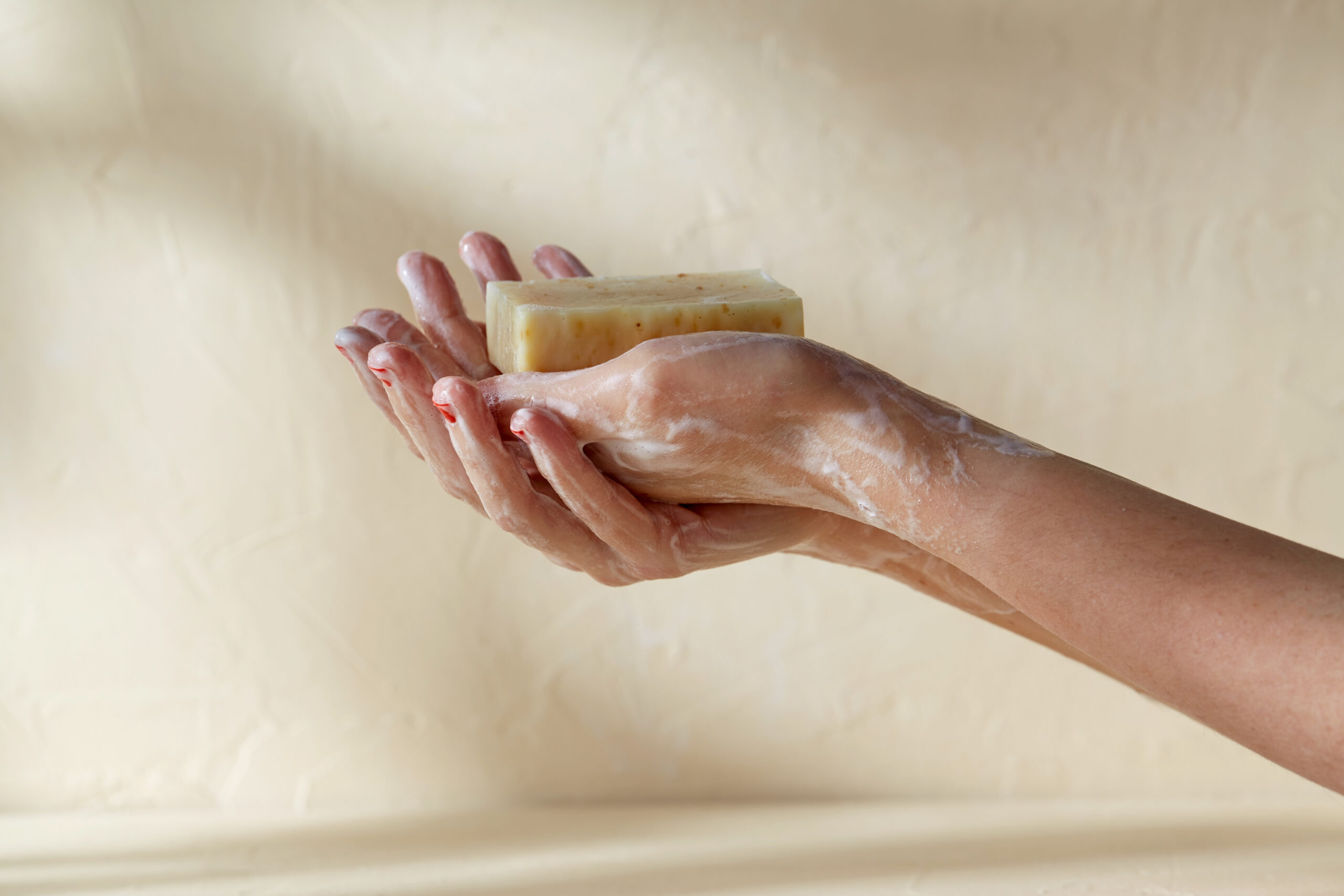
Natural soap is traditionally made using oils, butters, and lye through a process called saponification. Unlike commercial soaps, it retains naturally occurring byproducts like glycerin and avoids harsh synthetic detergents.
Typical natural soap ingredients include:
Plant oils (like olive or coconut oil)
Goat’s milk
Natural clays or botanicals
Essential oils or gentle fragrances
The result? A bar of soap that cleans your skin without stripping it.
Many high-street “soaps” aren’t actually soap at all.
They’re often synthetic cleansers (sometimes called syndet bars) made with:
Harsh surfactants
Artificial foaming agents
Preservatives and fillers
These ingredients are designed to:
Create a big lather
Extend shelf life
Reduce production costs
But they can also:
Strip your skin’s natural oils
Disrupt your skin barrier
Leave skin feeling tight, dry, or irritated
If you have sensitive skin, eczema, or dryness, this can make symptoms worse over time.
One of the biggest benefits of natural soap is how mild and nourishing it feels.
Natural formulations are designed to:
Clean without over-drying
Support your skin barrier
Maintain natural moisture levels
Goat’s milk soap, in particular, is known for being incredibly gentle. It contains naturally occurring fats and lactic acid, which help soften and soothe the skin.
For people dealing with:
Dry hands
Sensitive skin
Eczema-prone areas
Switching to a gentler soap can make a noticeable difference.
Here’s something most people don’t realise:
Glycerin is a natural humectant, meaning it draws moisture into the skin.
Benefits of glycerin:
Helps keep skin hydrated
Prevents dryness after washing
Leaves skin feeling soft and smooth
By keeping glycerin in the bar, natural soap actively supports hydration, rather than working against it.
Natural soap avoids many of the common irritants found in mass-produced products.
That means:
No unnecessary fillers
No harsh detergents
No overly aggressive cleansing agents
Instead, you get a shorter, more transparent ingredient list — something that’s especially important if you’re trying to understand what you’re putting on your skin.
For sensitive skin, less is often more.
If you’ve struggled to find a soap that doesn’t irritate your skin, natural soap is often the turning point.
Because it’s:
Less stripping
More nourishing
Free from harsh surfactants
It’s commonly preferred by people with:
Eczema
Psoriasis
Dry or reactive skin
While it’s not a medical treatment, many people find that switching to natural soap helps reduce irritation and improves overall skin comfort.
Natural soap isn’t just better for your skin — it often aligns with more ethical and sustainable values.
At The Little Goat Soap Company, that means:
Thoughtfully sourced ingredients
Small-batch production
A focus on quality over mass production
Choosing natural soap supports a more conscious approach to skincare — one that values transparency, care, and craftsmanship.
Your skin has a natural barrier designed to protect and hydrate.
Harsh soaps can damage this barrier over time, leading to:
Increased sensitivity
Dryness
Irritation
Natural soap, on the other hand, works in harmony with your skin by:
Supporting moisture balance
Gently cleansing without disruption
Leaving skin comfortable after washing
That “tight” feeling after washing?
That’s not cleanliness — that’s your skin asking for help.
For most people, yes — especially if you:
Have dry or sensitive skin
Experience irritation from regular soap
Want a more natural skincare routine
As with any skincare product, it’s always worth doing a patch test if your skin is particularly reactive.
Switching to natural soap is one of the simplest changes you can make — but it can have a big impact.
You’re not just choosing a cleanser.
You’re choosing:
Gentler ingredients
Better hydration
A more skin-friendly routine
At The Little Goat Soap Company, everything we make is designed with this in mind — skincare that feels good, works gently, and supports your skin every day.
Because clean skin shouldn’t come at the cost of comfort.