

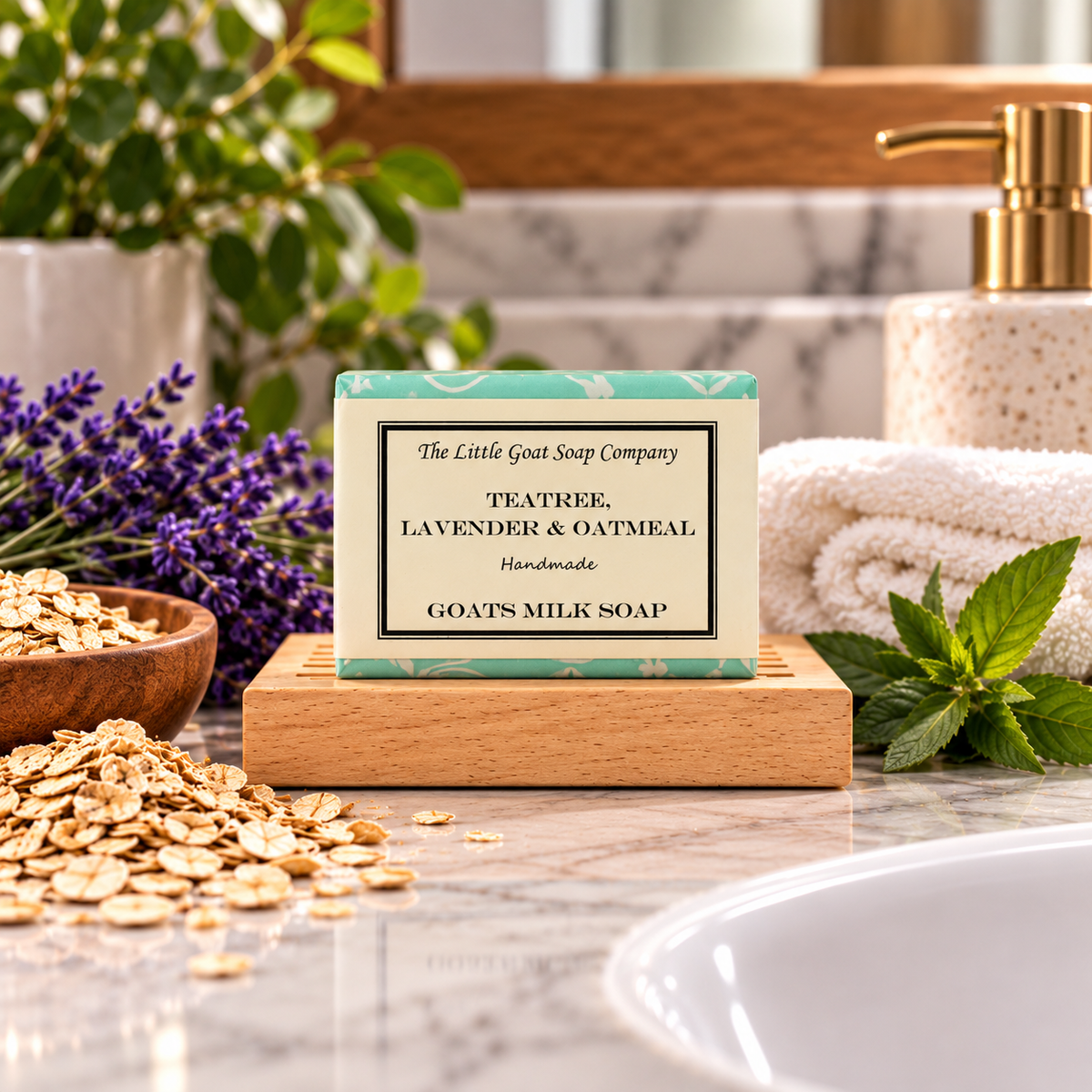
Acne and body breakouts are among the most common skin concerns there are, and the shelves are full of aggressive washes promising to blast them away. The problem is that stripping, high-foam cleansers often make things worse — drying the skin, damaging its barrier, and triggering it to produce even more oil. This guide looks at what actually drives breakouts, and how a gentler, pH-friendly goat milk soap routine can help you cleanse without the collateral damage.
What causes acne and body breakouts?
A spot forms when a hair follicle becomes blocked with a mix of dead skin cells and sebum (the skin's natural oil). That blockage can become a blackhead or whitehead, and when bacteria get involved it can turn into an inflamed, red spot. Several things feed the process:
- Excess oil. Hormones, stress and genetics all influence how much sebum your skin produces.
- Dead skin build-up. When old skin cells don't shed cleanly, they help plug the follicle.
- A disrupted skin barrier. Over-washing and harsh products damage the barrier, which can paradoxically lead to more oil and more irritation.
- Friction and sweat. "Bacne" and chest breakouts are often linked to sweat, tight clothing and sports kit trapped against the skin.
Breakouts aren't limited to teenagers or to the face — adult acne is extremely common, and the back, chest and shoulders are frequent trouble spots for people of all ages.
Why harsh anti-acne soaps can backfire
Many dedicated spot-fighting washes rely on strong detergents like Sodium Lauryl Sulfate (SLS) and high concentrations of drying actives. They can leave skin feeling squeaky-clean, but that tight feeling is actually a sign the skin barrier has been stripped. When skin is stripped, two things tend to happen: it loses water and becomes irritated, and it often responds by producing more oil to compensate — which can mean more breakouts, not fewer. For an idea of what to watch out for, our guide to harmful ingredients in soaps is a useful starting point.
How goat milk soap supports breakout-prone skin
Goat milk soap takes a gentler approach: it cleanses away excess oil, sweat and grime without stripping the barrier, which is exactly what inflamed, breakout-prone skin needs.
It's naturally kind to your skin's pH
Healthy skin is slightly acidic, which helps keep bacteria in check and the barrier intact. Goat's milk is naturally close to the skin's own pH, so it cleanses without the harsh alkalinity of many traditional soaps — you can read more in our article on goat milk soap and pH balance.
Gentle exfoliation from lactic acid
The lactic acid naturally present in goat's milk is a mild alpha hydroxy acid that helps loosen and shed dead skin cells — the same cells that help block follicles in the first place — without the harshness of a physical scrub.
Ingredients that calm and clarify
- Tea Tree Essential Oil — long valued for its naturally antibacterial and clarifying properties, which is why it appears so often in products aimed at blemish-prone skin.
- Neem Oil — traditionally used to soothe and support troubled, breakout-prone skin.
- Shea Butter — non-comedogenic (it won't clog pores) and anti-inflammatory, so it calms redness without adding to the problem.
Because our bars are free from SLS, they cleanse gently enough to use daily on the face and body without that tight, stripped feeling.
Building a routine for breakout-prone skin
1. Cleanse gently, morning and night.
Wash with a goat milk soap bar and lukewarm water. Resist the urge to scrub — gentle, consistent cleansing beats aggressive washing.
2. Don't over-wash.
Washing too often, or with water that's too hot, strips the barrier and can trigger more oil. Twice a day is plenty for most people.
3. Moisturise — yes, even oily skin.
Skipping moisturiser on oily or breakout-prone skin is a common mistake. A light goat milk lotion keeps the barrier healthy so skin doesn't overcompensate with oil.
4. Tackle body breakouts after sweating.
Shower and change out of damp sports kit soon after exercise, and wash the back and chest with a gentle bar to clear trapped sweat and oil.
5. Go fragrance-free if your skin is reactive.
If breakouts come with sensitivity or redness, an unscented bar removes fragrance as a possible trigger.
6. Give it time.
Skin cell turnover takes several weeks, so give any new routine at least a month before judging it.
When to see a professional
A gentle routine can make a real difference to mild, everyday breakouts. But if you have persistent, painful, cystic or scarring acne, or breakouts that aren't improving despite a careful routine, it's worth seeing a GP or dermatologist — effective medical treatments are available and early help can prevent scarring. Goat milk soap is intended to cleanse and support breakout-prone skin gently as part of a daily routine, not to diagnose or treat acne as a medical condition.
FAQ
Can goat milk soap clear up acne?
No soap can "clear" acne on its own, and it won't replace medical treatment for moderate or severe acne. What a gentle goat milk soap can do is cleanse without stripping the skin, support a healthy barrier and pH, and avoid the harsh ingredients that often make breakouts worse.
Will soap make my oily skin worse?
A stripping, high-foam soap can — by drying the skin and prompting it to produce more oil. A gentle, pH-friendly goat milk bar cleanses excess oil without that rebound effect.
Is goat milk soap good for back and body acne?
Yes. The back, chest and shoulders respond well to gentle cleansing, especially after sweating. A tea tree or unscented bar used daily can help keep these areas clear.
Won't the oils and butters in the soap clog my pores?
The ingredients we use, such as shea butter, are non-comedogenic, meaning they're formulated to moisturise without blocking pores. In a wash-off soap, they cleanse gently rather than leaving a pore-clogging residue.
Scented or unscented for acne-prone skin?
A tea tree bar is a popular choice for its clarifying reputation, but if your skin is also sensitive, start with an unscented option and keep the routine simple.


