

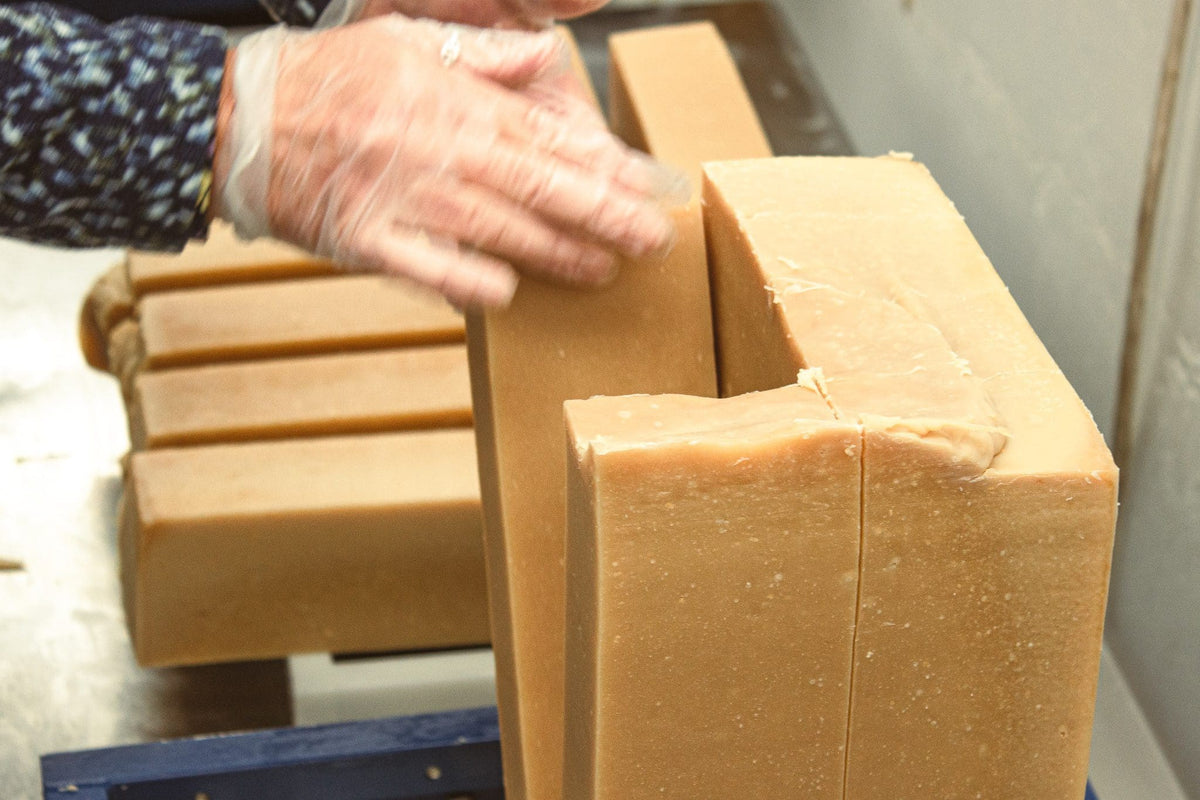
There are far more companies making goat milk soap today than when we started out over a decade ago. That's lovely to see, but not every goat milk soap is made the same way. Some use powdered milk, some dilute it with water, and a few contain so little milk that it's barely there.
Ours starts somewhere a bit different: in a field on our farm in Oxfordshire, with a small herd of goats who all have names. Here's how a bar of our goat milk soap comes together, from the goats themselves to the finished bar.
Meet the herd
Our milking ladies are family pets first and foremost. Every one of them has a name, and we give them the best life we possibly can. When they retire from milking they simply stay with the herd, usually in their family groups, keeping a watchful eye on the grand-kids.
Kidding season
Kidding season is one of the busiest (and best) times of year on the farm. In the run-up, the girls' bellies grow enormous and they begin to 'bag up', which means their udders fill with colostrum, the rich first milk that gives newborn kids a strong start.
We know a birth is close when a goat starts pawing and scratching her bedding into a nest. Then come the soft little murmuring noises: goats actually talk to their babies before they're born, and carry on chatting to them in the same way for the first few days of life.
Our kids stay with their mums until they're at least six months old. After that, they either join our herd or move on to pastures new.
Goats really do prefer a smile
Anyone who keeps goats will tell you they're more sociable when you're in a good mood, and there's science to back that up. A 2018 study carried out at a goat sanctuary in Kent showed goats pairs of photos of the same person looking happy and looking angry. The goats headed for the smiling face first and spent more time investigating it with their noses. So if you ever visit a goat, smile. You'll make a friend faster.
Why fresh, raw goat milk matters
We use 100% fresh, raw goat milk from our own herd in every bar. We don't dilute it with water and we never swap it for a cheaper powdered alternative. Keeping the milk as it comes means more of its natural goodness ends up in the soap, which is the whole point of making goat milk soap in the first place.
Fresh goat milk brings three things to a bar of soap:
- Natural fats that help cleanse gently without stripping the skin's own oils, so skin feels comfortable rather than tight after washing.
- Lactic acid, a naturally occurring alpha-hydroxy acid (AHA) that gently lifts away dead skin cells for a smoother feel.
- Vitamins and minerals, including vitamin A, which helps keep skin looking soft and supple.
You can read more about why this makes goat milk soap a kinder choice in our guides to goat milk soap and pH balance and why natural soap is better for your skin.
Making soap is harder than it looks
From the outside, soap-making can look simple: combine some oils with goat milk and, hey presto, soap. In reality it's a craft that takes years to get right.
Temperature is one of the biggest challenges. If the mixture is too hot or too cold, the soap won't set properly, and working with fresh milk makes that balance even more delicate. The seasons change how our kitchen behaves too, so a method that works perfectly in January needs adjusting by July. After more than a decade of making soap by hand in small batches, we've learned to account for all of that, so every bar comes out just as it should.
Like all true soap, ours is made through saponification, the reaction between oils and sodium hydroxide. It's an essential step, but none of the sodium hydroxide remains in the finished bar. What's left is a gentle cleansing bar packed with the goodness of the milk and oils.
What goes into our bars (and what doesn't)
We pair our raw goat milk with natural oils chosen for two jobs: caring for your skin, and producing a long-lasting bar that doesn't turn to mush, with a fluffy, creamy lather. Most of our bars also include shea butter for extra richness, and natural vitamin E (tocopherol) for its antioxidant properties.
Where we use palm oil, it's RSPO-certified Identity Preserved, so it's fully traceable from plantation to bar.
Just as important is what we leave out. Our soaps contain:
- No parabens
- No sodium lauryl sulphate (SLS)
- No added colours
And none of our products are ever tested on animals. If you'd like to look up any ingredient on our labels, our ingredient glossary explains each one in plain English.
Our best-seller: Simply Goat Milk Soap
If there's one bar that sums up what we do, it's Simply (unscented) Goat Milk Soap. It's our best-selling product and contains nothing but goat milk, natural oils, shea butter and vitamin E, with no fragrance at all. That makes it a popular choice for sensitive skin and for anyone who simply prefers an unscented soap.
As one customer put it: "This is my favourite soap, I use it on my face every day and it's so gentle." You can read hundreds more independent reviews on our Feefo page.
A quick note on sensitive skin
Goat milk soap is naturally gentle, but everyone's skin is different. If you have very sensitive skin or a skin condition, we'd always suggest a patch test first: use a small amount on your inner arm and wait 24 hours before using it more widely. If you're managing a skin condition, it's worth talking to your GP or a dermatologist about your routine too.
Where to start
New to goat milk soap? These are good places to begin:
- Full-size soap bars: our complete range of scents, plus the unscented Simply bar
- Discovery collections: try a mix of soaps, lotions and shampoos in one go
- Guest and travel size: smaller bars, handy for trying a scent before committing
Every bar is still made the way we started out: by hand, in small batches, with fresh milk from our own goats.


