

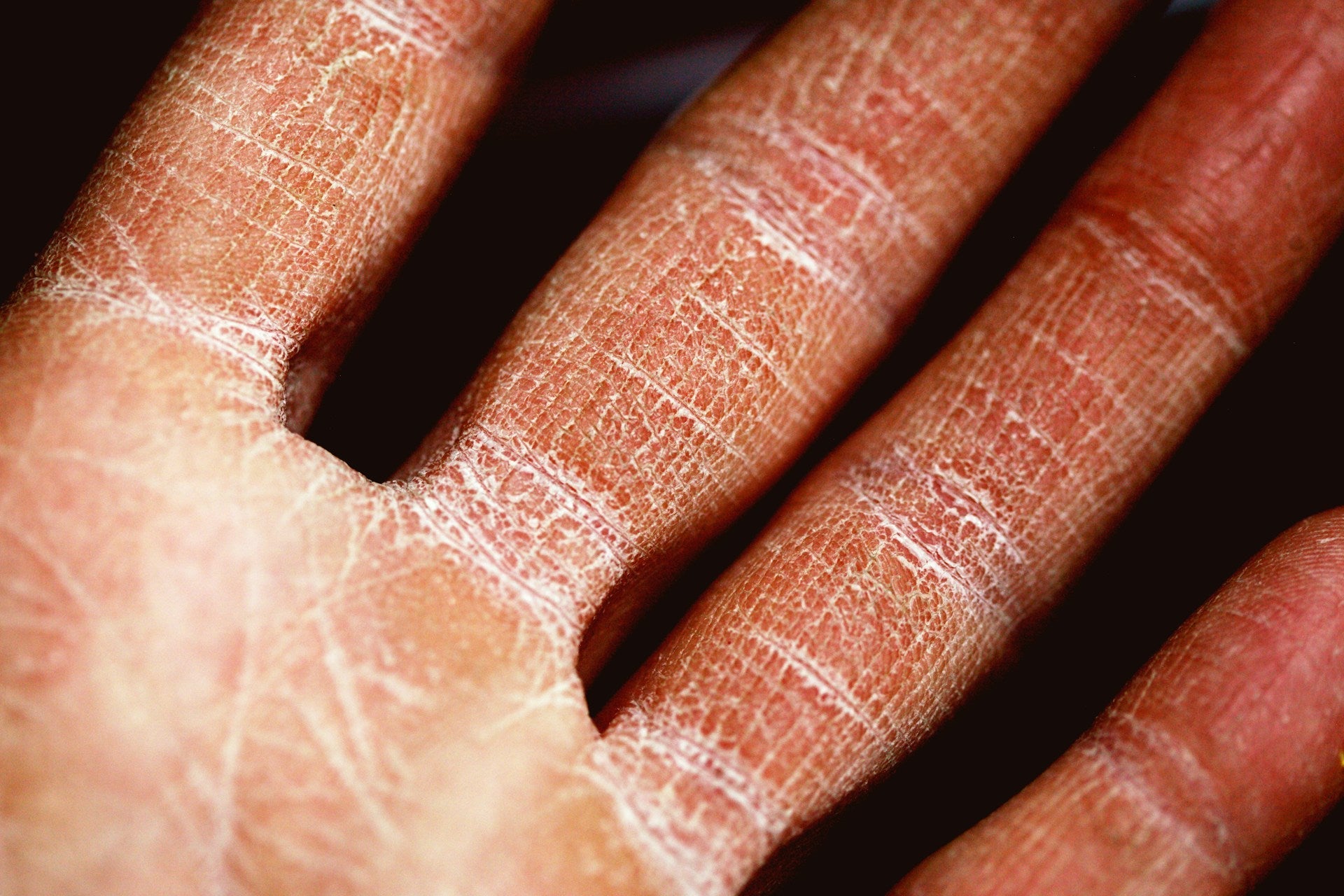
Few things make a normal day harder than dry, cracked hands. Constant handwashing, cold weather, hot water, and harsh soaps all take their toll — and once skin cracks, everyday tasks like typing, washing up, or even holding a cup of tea can genuinely sting. This guide looks at why hands crack in the first place, and how a gentler soap routine can help soothe and support them back to comfort.
Why hands crack more than any other part of the body
Hands are washed more often than almost any other part of the body, and the skin there is thinner and has fewer oil glands than skin on the rest of the body — particularly on the backs of the hands and between the fingers. A few everyday habits make this worse:
- Frequent handwashing. Every wash strips away a little of the skin's natural oils. Repeated washing throughout the day, especially with hot water, doesn't give the skin barrier time to recover.
- Harsh, foaming soap. Many commercial hand soaps rely on Sodium Lauryl Sulfate (SLS) for lather. It's an effective cleanser, but a well-known irritant that can strip away the lipids that keep skin supple.
- Hand sanitiser. Alcohol-based sanitiser is excellent for hygiene but dries skin out fast with repeated use, especially without a moisturiser to follow it.
- Cold weather. Low humidity and cold wind pull moisture from exposed skin, which is part of why cracked hands are so much more common in winter.
- Hot water. It feels comforting, but hot water breaks down the skin's natural oil barrier faster than lukewarm water does.
Once the skin barrier is compromised, moisture escapes faster than it can be replaced — and in more severe cases, skin can crack open at the knuckles or fingertips, which is uncomfortable and slow to heal because hands are almost never fully at rest.
Why goat milk soap is different
Ordinary soap is designed to cleanse. Goat milk soap is built to cleanse and nourish at the same time, which matters most on hands that are washed many times a day.
Goat milk itself is the foundation. It's naturally rich in fatty acids, vitamins A, B1, B6, B12, C, D and E, and lactic acid, which help maintain moisture rather than strip it away. Because our soap is hypoallergenic and free from SLS, it cleanses gently — important for skin that's already under daily strain.
A few specific ingredients do extra work for dry, damaged hands:
- Shea Butter — rich in vitamins A and E, naturally anti-inflammatory, and non-comedogenic, so it calms redness and supports the skin's barrier without clogging pores.
- Castor Oil — a heavier, deeply moisturising oil often used specifically for very dry or rough skin.
- Oat Oil — contains ceramides and avenanthramides, which help support the skin's structure and reduce redness and irritation.
- Natural Glycerin — draws moisture into the skin and helps it stay there.
- Olive Pomace Oil — supports skin cell regeneration, which is particularly useful for healing dry, cracked skin.
Together, these mean the soap itself is doing some of the moisturising work that a harsher soap would undo with every wash.
Building a routine for dry, cracked hands
1. Switch your everyday hand soap.
This is the highest-impact change, simply because it's the product touching your hands most often. Our Goat Milk Soap range is a straightforward swap for a kitchen or bathroom soap dispenser.
2. Wash with lukewarm, not hot, water.
It takes a little getting used to, but it makes a noticeable difference over a week or two.
3. Moisturise straight after washing — every time.
This is the step most people skip. Applying a lotion or balm within a minute or two of drying your hands locks in the moisture that washing just added, rather than letting it evaporate. Keep a small Goat Milk Lotion by the sink or in a bag if you're out and about.
4. Protect at night.
Applying a richer balm before bed and, if practical, wearing cotton gloves overnight gives cracked skin uninterrupted time to recover while you're not washing your hands.
5. Be mindful with sanitiser.
Use it when you need to, but follow up with a moisturiser when you can, rather than letting alcohol-based sanitiser be the last thing your skin absorbs.
6. Patch test if your skin is very reactive.
If your hands are cracked to the point of broken skin, apply a small amount of any new product to an unaffected area first, and consider using an unscented option from our Unscented Skin Products range while your skin recovers.
When to see a professional
Occasional dryness usually responds well to a gentler routine. However, if your hands are severely cracked, bleeding, not improving after a couple of weeks, or you notice signs of infection (increasing redness, warmth, swelling or pus), it's worth speaking to a GP or dermatologist. Persistent cracking can sometimes be linked to an underlying condition such as eczema or dermatitis, which may benefit from additional treatment alongside a gentler daily routine.
FAQ
How long does it take goat milk soap to help with cracked hands?
Everyone's skin is different, but many people notice their hands feel less tight and more comfortable within a week or two of switching soap and moisturising consistently. Deep cracks can take longer to fully heal.
Can I use goat milk soap on hands as often as I need to wash them?
Yes — it's formulated to cleanse gently rather than strip the skin, which is exactly why it suits hands that need washing frequently. Pairing it with a moisturiser afterwards gives the best results.
Is scented or unscented goat milk soap better for cracked hands?
Either can work, but if your skin is very sore, cracked or reactive, unscented is the gentler starting point since fragrance can occasionally irritate compromised skin.
What's the difference between goat milk soap and a hand cream for cracked hands?
They work best together rather than as alternatives. Soap affects your skin every time you wash; a lotion or balm applied afterwards replaces the moisture that washing removes. Using a gentle soap without following up with moisturiser will only get you part of the way there.
Will goat milk soap cure cracked hands?
No soap can cure cracked skin outright, especially if there's an underlying cause. What a gentler routine — soap, moisturiser and warmer water — can do is soothe and support your skin's own recovery and reduce how often it happens.
Is this suitable for hands affected by eczema or dermatitis?
Many customers with eczema or dermatitis-prone hands find our range comfortable to use, since it avoids SLS and harsh fragrance. If you have a diagnosed condition, it's worth checking with your GP or dermatologist before changing your routine, particularly during a flare-up.


